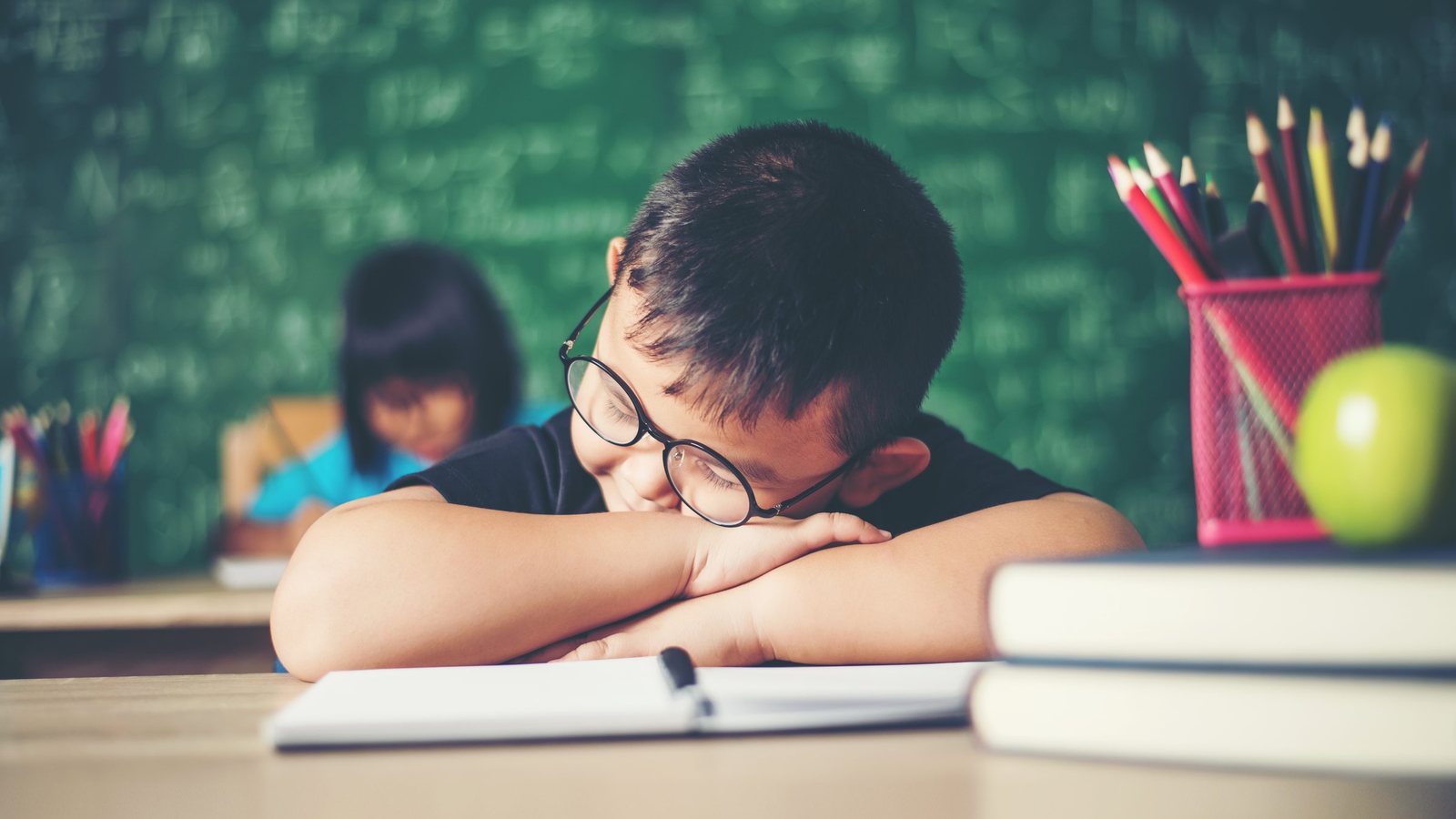
Unremarkable at school, a collapse at home. That's not a contradiction, but often the clearest sign of all. And it costs your child more energy than can be seen from outside.
There are children whose school says: “Everything's fine with us.” And at home you experience a child who explodes after coming home, cries or withdraws completely. This contrast confuses many parents and sometimes themselves too: am I doing something wrong at home? The answer is almost always no. What you're experiencing has a name: masking.
What masking means
Masking, also called camouflaging, describes the constant effort to seem “normal”. A child suppresses tics or the urge to move. They force themselves into eye contact that feels uncomfortable. They copy how others talk, laugh and react, and smile although they're long overwhelmed. On the outside this works astonishingly well. On the inside, an exhausting control programme runs all day that hardly anyone sees.
Why it's so exhausting
Imagine having to speak for eight hours in a foreign language in which you're unsure of every sentence, and smiling the whole time at once. That's roughly how a masked school day feels. Research shows that masking is linked to exhaustion, a higher risk of anxiety and depression, and to late or entirely missed diagnoses.
The child holds it together during the day within the safe frame of school and only lets everything out at home, the safest place. What parents experience as the “afternoon collapse” is therefore not a sign that something's going wrong at home. On the contrary, it's a sign of trust: with you, the child can finally stop acting.
The full text is in the app
In bloomnow you get the whole article, together with the exercises that belong to it. The app launches soon. Leave your address and we will write to you at launch.
Pre-register