
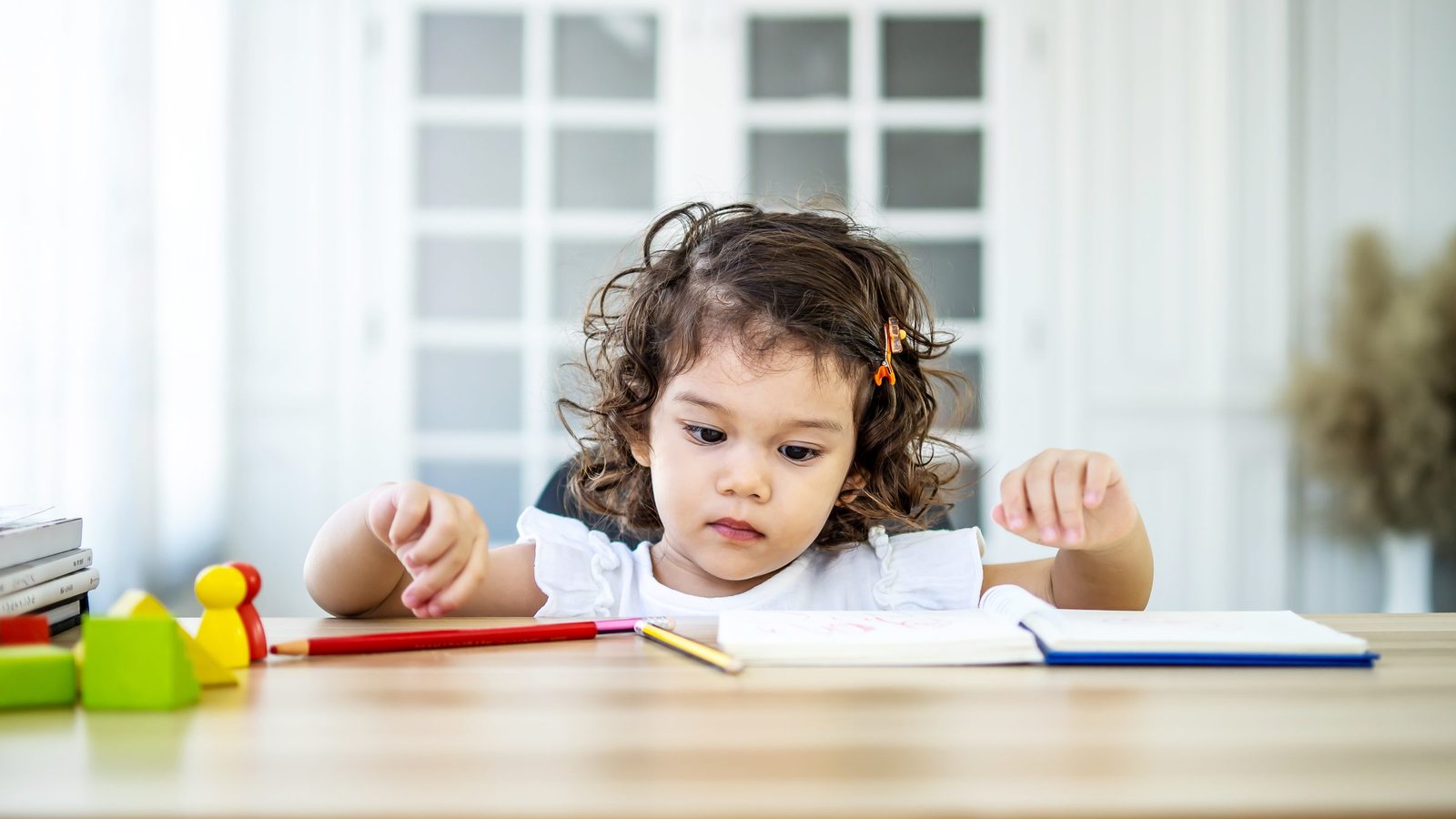
Quiet activities: what a child can do well on their own for 10 to 20 minutes

Short answers
What is a quiet activity?
A familiar, calm activity that does the child good and that they can do alone for 10 to 20 minutes, without instructions, praise or a result. It is not a punishment and not a reward that has to be earned.
What does a quiet activity help with in class?
Calming down after overstimulation, preventing escalation at the first signs of tension, and bridging transitions and waiting times. It also gives you a few minutes for other children without leaving one child alone with it.
How do I find the right quiet activity for a child?
Together with the parents, in a calm conversation: what does the child do on their own at home, what calms them, what are they passionate about, what should be avoided? And ask the child; many can say very precisely what does them good.
Every child needs moments when they can simply be with themselves. For neurodivergent children, a well-chosen quiet activity is often more than a way to pass the time: it is a tool for self-regulation.
The question sounds simple, and yet it is one of the most helpful ones you can ask: what can this child do on their own for 10 to 20 minutes, without needing instructions, praise or an adult? If you know the answer, you have something to hand for difficult moments, and for perfectly ordinary ones too.
What a quiet activity is and what it isn't
A quiet activity is a familiar, calm occupation that does the child good and that they can do independently. It has no goal that has to be reached and no result that gets marked. It is not a punishment task, not a reward that has to be earned, and not “keeping them busy so we get some peace”. You can tell the difference because the child comes out of the activity more relaxed than they went in.
What it helps with
- Calming down. After sensory overload, a meltdown or a shutdown, it is a bridge back into the day.
- Prevention. Offered early, when the first signs of tension appear, it can help before things become too much.
- Transitions and waiting times. When a child finishes early, has to wait for something or a change is coming up.
- You. It gives you a few minutes to look after other children or get help, without leaving a child to fend for themselves.
The parents know the best answer
What really calms a child is very individual. What is relaxing for one child is a demand for another. That is why it pays to work out the quiet activity together with the parents, ideally in a calm conversation and not only after a difficult day. Helpful questions for the parents:
- What does your child do at home of their own accord, and on their own for longer stretches?
- What calms them when they are upset?
- What are they passionate about right now? Dinosaurs, trains, Minecraft, horses, space.
- What should we rather avoid because it excites or overwhelms them?
- Is there an object that gives them a sense of security?
Ask the child too. In a calm moment, many children can say very precisely what does them good.
Ideas for quiet activities
This list is a collection, not a prescription. What matters is what works for this one child.
- For the hands: modelling clay, threading, peg boards, building blocks, beads, pipe cleaners, a fidget, origami for the experienced.
- For the eyes: busy picture books, spot-the-difference pictures, non-fiction books on their favourite topic, comics, picture cards.
- For sorting: puzzles, sorting boxes, laying out patterns, sorting cards by colour or shape. Many children find calm in order.
- For drawing: free drawing, colouring pages, mandalas. Note: for some children, templates are a demand with “right” and “wrong”. In that case, a blank sheet is better.
- For listening: an audiobook or calm music with headphones, if the school allows it.
- With calm movement: a wobble cushion, a stress ball, a small sandbag to squeeze. For many children, movement is part of regulation, not its opposite.
- The favourite topic: a small box for their special interest. The special interest is not a distraction but often the most reliable resource a child has.
A calm box for every child
A personal box with the child's name on it has proven its worth, filled with two or three things that demonstrably work. It always stays in the same place, can be reached at any time and is restocked together with the child from time to time. Important: the box is an offer. It is not taken away when something goes wrong, and it does not have to be earned.
For children with a PDA profile: offer, don't order. “The box is there if you'd like it” often works better than “Get your box now”.
“A good quiet activity is not a gap filler. It is a place a child can return to.”
If you take away just one thing: at the next parent meeting, ask what the child can do on their own for 10 to 20 minutes. The answer is often worth more than any method.
It continues in the app
bloomnow is there for exactly the moments this text is about: tools for the hard minutes, videos from professionals, and a community that knows the same everyday life.
Get the app